

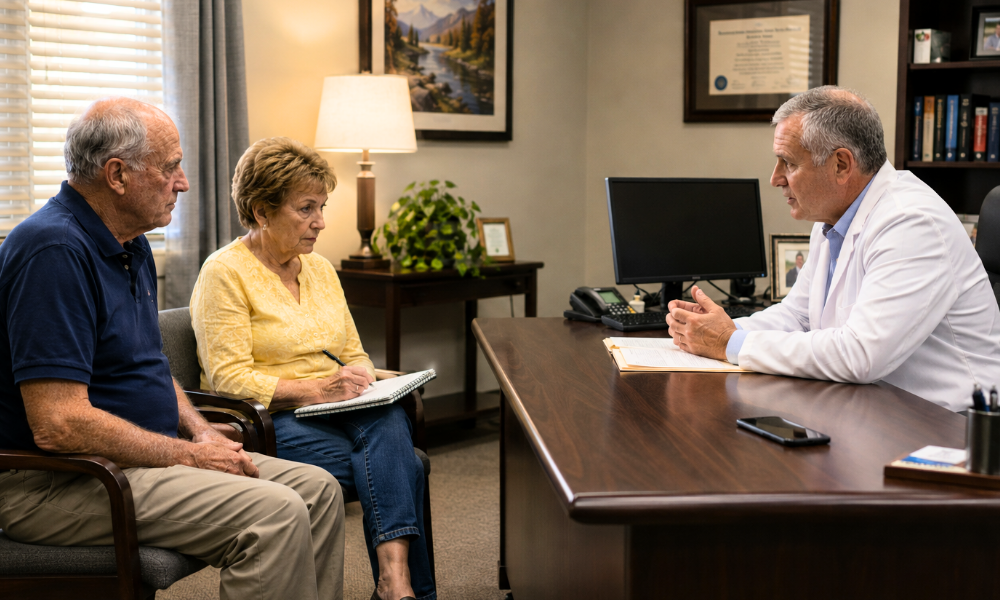
A new diagnosis changes the shape of a doctor’s visit. It’s no longer just an appointment. It’s the start of a plan, and what you bring with you can make that first visit feel a lot less overwhelming.
If you’re supporting a parent, spouse, or friend through this, here’s a checklist to help you both walk in prepared.
The paperwork
- Insurance card and photo ID. Keep both in one spot so there’s no digging through a bag in the waiting room.
- A list of current medications and supplements. Include dosages and how often each one is taken. If it’s easier, take a photo of every bottle instead.
- Past medical records related to the diagnosis. Test results, imaging reports, or referral notes from other doctors, if you have them.
- A list of other providers. Primary care doctor, specialists, and pharmacy, with phone numbers if you have them handy.
The questions
It’s easy to walk out of an appointment forgetting half of what you meant to ask. Write questions down ahead of time, and leave room to jot down the answers. A few to consider:
- What does this diagnosis mean, in plain terms?
- What are the treatment options, and what do they involve?
- What changes should we expect day to day?
- Are there symptoms that mean we should call right away?
- What should we do before the next appointment?
The extras that make a real difference
- A list of current medications, including vitamins/supplements.
- Paperwork, Any recent test results, notes, or discharge instructions
- A notebook and pen. Even if you plan to remember everything, write it down. There’s usually more information than anyone can hold onto in the moment. Have your questions written in the notebook and leave a space for the answers.
- A (phone) recorder, Record the conversations with the doctor to listen to once you are home or pass on to your family to listen to.
- A fully charged phone or phone charger. Long waits happen, recording can soak up the battery life and a dead phone doesn’t help anyone.
- Snacks and water. Appointments run long, and low blood sugar makes it harder to focus and process what’s being said.
- A comfort item. A favorite sweater, a small pillow, or anything that helps your loved one feel more at ease in an unfamiliar room.
- A second set of ears. If you can, bring someone else along. Two people remember more than one, and it means your loved one isn’t processing the news alone.
Something to lean on afterward
The visit itself is only the beginning. What follows, appointments, new routines, and sometimes a new normal, can be a lot to carry alone.
This is where we can help. Our Transportation Service can get you or your loved one safely to and from appointments, so getting there isn’t one more thing to worry about.
You don’t have to manage every part of this by yourself. Reach out to Neighbors Who Care, and let us help carry some of the load. Be sure to check our Resource Page for helpful information and support groups.