

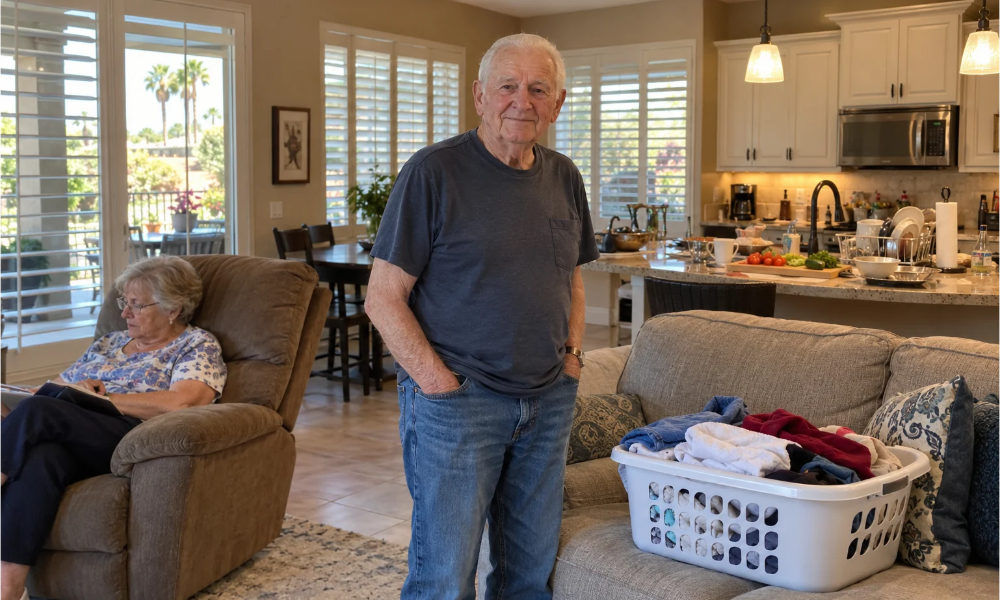
A friend calls and asks, “What can I do?” Before you’ve even thought about it, you hear yourself saying, “Oh, we’re fine!” Meanwhile, the laundry is piling up, there’s a prescription waiting at the pharmacy, and you can’t remember the last time you had a few hours to yourself.
Sound familiar?
Sometimes we say we’re fine because we don’t want to bother anyone. Other times, we’re so overwhelmed that figuring out what to ask for feels like one more thing on an already overflowing to-do list. It’s easier to smile, thank them for offering, and keep doing what we’ve always done.
Handle it ourselves.
Most of us learned early that being capable is a good thing. Tie your own shoes. Carry your own groceries. Figure it out.
Then caregiving enters the picture, and suddenly there are challenges you can’t outwork or outthink. The responsibilities keep growing, the days start to blur, and still that little voice insists, I should be able to handle this.
And that’s why three small words, “I need help,” can feel like the hardest ones a caregiver will ever say.
The Walls We Put Up
If you’ve ever talked yourself out of asking for help, see if any of these ring a bell.
- “They have their own lives.” You don’t want to be a burden. Everyone else has jobs, families, and responsibilities. So you convince yourself your needs can wait. Again.
- “Nobody will do it right.” You know the routine, the medications, and exactly how Mom likes her lunch. Explaining everything feels exhausting, so you decide it’s easier to do it yourself.
- “If I admit how hard this is, it makes it real.” As long as you keep smiling and saying you’re fine, you can pretend you’ve got everything under control.
- “Real love means doing it all.” Somewhere along the way, sacrifice got confused with devotion. You start believing that needing a break somehow means you don’t love the person you’re caring for enough.
Here’s something worth remembering: You can love someone with your whole heart and still be exhausted by the responsibility of caring for them. Both things can be true.
Caregiving Was Never Meant to Be Solo
We tend to picture the devoted caregiver who handles everything, never complains, and keeps smiling through it all. It’s a lovely picture, but it’s not particularly realistic.
Caregiving can be physically exhausting, emotionally draining, and downright lonely. And when you’re running on empty, the smallest things can become enormous. You lose patience, forget things, or snap at someone you love and feel guilty about it afterward.
Doing everything yourself may feel like the most loving choice, but exhaustion can slowly steal the patience, energy, and tenderness you want to give.
Accepting help doesn’t mean you’re doing less for your loved one. It means you’re making room to care for yourself, too.
And you matter in this equation.
Make Asking (and Accepting) Easier
Asking for help sounds wonderful in theory. Actually doing it is another story.
But you don’t have to suddenly become comfortable asking everyone for everything. Start with a few small changes.
- Be specific. Instead of saying, “I could really use some help,” try, “Could you sit with Mom Tuesday afternoon for two hours so I can run errands?” People often want to help but don’t know what would be useful.
- Keep a running list. Write down things someone else could do: pick up groceries, collect a prescription, bring dinner, make a phone call, or spend an hour visiting. When someone asks what they can do, you won’t have to think of something on the spot.
- Start small. You don’t have to hand over an entire afternoon of caregiving. Start by asking someone to pick up a few groceries or drop off lunch. Little requests help you get comfortable accepting support.
- Say yes when someone offers. Before your automatic “Oh, that’s okay, I’ve got it” slips out, try saying, “Thank you. That would really help.” And for any scorekeepers out there, you don’t have to repay every casserole with another casserole.
- Give an honest answer. The next time someone asks how you’re doing, resist the urge to say “Fine!” Try, “It’s been a rough week, and I could really use a little help.” You don’t have to tell your whole story to let someone know you need support.
- Remember how you’d feel. If someone you loved was overwhelmed, wouldn’t you want them to ask you for help? Give the people who care about you that same opportunity.
And here’s one more thing. You can accept help without giving up control. Asking someone to pick up groceries doesn’t mean you’re handing over every caregiving decision. You get to decide what help you need and what you’re comfortable sharing.
Let Them Help Imperfectly
Now comes the part that might be even harder than asking: letting people do things their own way.
Your sister might fold the towels differently. Someone might load the dishwasher in a way that makes absolutely no sense to you. And the vegetables your friend chops for dinner may look nothing like yours.
It’s okay.
The towels will still be folded, the dishes will still get clean, and dinner will still make it to the table.
Of course, some things really do need to be done a certain way, especially when medications, safety, or medical care are involved. Those are worth explaining carefully. But not every task needs your personal supervision.
You don’t have to hover, apologize repeatedly, or spend the entire time worrying that you’re inconveniencing someone.
Sometimes the kindest thing you can do for yourself is let someone else take care of something, even if they don’t do it exactly the way you would.
Three Words Worth Practicing
If asking for help feels uncomfortable, you’re in good company. For some of us, it’s going to take a little practice to stop automatically saying, “I’m fine,” when we’re anything but fine.
So here’s a little challenge.
Think of one thing on your to-do list this week that someone else could handle. Not everything. Just one thing.
Then think of one person you could ask.
You don’t need a long explanation, an apology, or a list of reasons why you deserve a little help.
You can simply say, “I need help.”
You spend so much of your life caring for someone else. It’s okay to let someone care for you, too.
Caring for the Caregivers
If you’re on the other side of this conversation, here’s something to remember. Instead of always saying, ‘Let me know if you need anything,’ try offering something specific. ‘I’m going to the grocery store. What can I pick up for you?’ Or, ‘I have a free afternoon Thursday. Can I sit with your husband while you get out for a while?’ Sometimes the greatest gift you can give an overwhelmed caregiver is one less decision to make.
If you’re caring for a loved one here in our community, you don’t have to figure this out alone. Visit our caregiver page dedicated to offering support and encouragement.